

Drew Povey
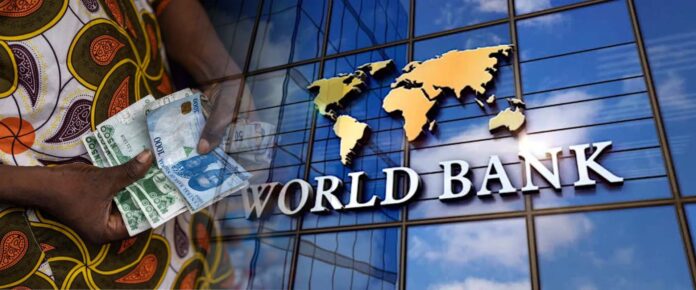
The World Bank accepts that social support is needed, at least for the very poor, with the introduction its free market neoliberal reforms. The World Bank has congratulated the Tinubu administration for ending fuel subsidy and allowing the exchange rate for the naira to be determined by the so-called free market. However, in a report issued in late 2025, the Bank admitted the complete failure of its social support programs. It had fully supported these in Nigeria, whilst admitting that Tinubu’s reforms had increased poverty. The fuel price increases and wider inflation, resulting from the end of fuel subsidy, pushed another 8 million into poverty according to the World Bank.
The World Bank report says that: “These Programs are vital in combating poverty by providing essential resources to help the poor meet their basic needs.” (page xiii) But then admits that the programs have failed in Nigeria despite its direct support. At no point in the report is the alternative approach of ending fees for primary education and health even considered. Despite the fact that this approach would provide a more comprehensive coverage, and reduce corruption and leakage of funds. The report indirectly supports this view by saying that the school feeding program targeted the poor as it was restricted to public schools that the poor attend and that it increased attendance (and so reducing the massive out of school population of children in Nigeria – in 2023 UNESCO estimated this to be perhaps 20 million children across primary and secondary aged children – the highest in the world).
The report admits that the Nigerian Government its self is not prepared to fund such social programs. It says that from 2015 to 2021 nearly two thirds of the funding (mainly from the Bank itself – 92%) for the schemes came from donor funding. The Bank has yet to learn that the core objective of any government in Nigeria is looting and staying in power – actually helping the common people has no role to play in the politicians thinking. The report makes this pitiful appeal: “There is an urgent need for Nigeria to find fiscal space for sustainable social safety net programming for them to be effective.” (page xiv)
As a result, coverage of social programs declined, covering only 6% of the poor by 2023. Even these families only saw an increase in their family income by a miserly 4%. The report admits: “Across key metrics – coverage, adequacy, and efficiency – Nigeria underperforms compared to regional, income level and aspirational peers.” (page xiv) As usual, the World Bank blames the recipients of its advice. It claims that in other, mainly far away, countries these schemes work, but no practical details are provided (although a hint that study trips could be organised to Brazil and India is included). There is no possibility from the Bank that their whole approach is wrong and inefficient.
The largest program, school feeding, was introduced in 2005 with 12 states on a trial basis. At its height it fed nearly 10 million children, employed around 100,000 cooks and paid 150,000 small holder farmers (mainly women). The scheme was well focussed on the poor as around 90% of pupils came from poor or vulnerable households. But the scheme was quietly dropped in 2022 (due to integrity concerns) after World Bank funding ended and has yet to be introduced. The next largest program, Housing Uplifting Program (cash transfer), reached only 2 million households at its height. The Federal feeding scheme covered only the first three years of primary pupils. The other three years were supposed to be covered by the state governments, but not one of the states developed any such schemes.
“Nigeria has the second largest number of poor people in the world, falling behind only India with seven times larger population. It currently has 10% of the world’s poor while accounting for less than 3% of the world’s population.” (page 16) The latest figures from the World Bank suggest that 60% of the population or nearly 130 million people are now poor – a huge increase from the figures in this report.
The poor were defined as those earning less than N22,000 per person in 2018/19 – the minimum wage was increased from N18,000 to N30,000 from April 2019. On this basis, over 40% of the population were poor and a further 25% were vulnerable (earning less than N33,000 a month per person) according to the report. This later group were one shock away from poverty, the main shocks are inflation, healthcare and crop loss from natural catastrophe. These shocks led to reduced food consumption in a third of households suffering such a shock (showing how low the poverty levels being used were). Nearly three times as many people were poor in rural areas than in urban areas.
“Between 2000 and 2014, real GDP per capita grew by a healthy 4.3% per year, but most of the gains accrued to the richer households, leaving the large masses of the poor behind.” (page 18). This undermines the World Bank’s usual view that a growing economy helps everyone. The industrial sector employs around 12% of the workforce, Whilst 46% of jobs are in services and 42% are in subsistence farming. In Britain, over 80% of jobs are in service sector and less than 10% are in the industrial sector.
“The Nigerian government has an ambitious goal to lift 100 million people out of poverty by 2030.” (page 20) The World Bank report admits that: “Accomplishing this goal requires, amongst others, redistributing the resources toward the poor and the vulnerable.” And then claims: “Safety net programs, and well designed, targeted, and implemented, accomplish exactly that.” (page 20) But the report admitted that the schemes in Nigeria suffered from “weak management and information systems” (page 46). To make things worse school feeding was largely introduced independently of existing systems and outside the control of head teachers.
The Bank claims that the Nigerian Government was projected to save over 5% of its GDP on fuel subsidy removal and exchange-rate reforms. The report admits that: “In 2021, Nigeria spent only 0.14% of its GDP on social protection, much lower than the average for sub-Saharan Africa of 1.2%” (page 21) Despite this the report claims that: “There is a desire within the government to use social protection programs as a key instrument to achieve its poverty eradication goal.” The Federal Government decided on the tiny figure of N70 per child per meal and no state government even joined the scheme. This meant that many pupils only received a token portion of moi-moi.
This shows how out of touch with reality the World Bank actually is. Clearly in a country like Nigeria, where corruption and looting of public funds is so rife, reducing opportunities for such behaviour should be an important factor in designing any intervention. Eliminating fees charged for primary education and health would massively reduce the opportunities for the leakages of such funds. In contrast safety net programs provide further opportunities for leakage, theft, and corruption. Despite all the evidence they provide, the authors of this World Bank report fail to reach this obvious conclusion.
The report also shows the complete callousness of governments in Nigeria. They have condemned 20 million children to even deeper hunger by denying them even a small extra meal every day that they attend school. We cannot rely on the World Bank, governments or other donors. We need to demand that the trade unions take the necessary collective and robust action to achieve the goal or reducing poverty.
The full World Bank report is available from: https://tinyurl.com/52x5r5p2