

The experience of the 2023 elections and the political developments that have followed make one point increasingly unavoidable: if Nigeria’s left, labour movement, and progressive forces remain divided, they will continue to struggle against entrenched elite dominance. The challenge is not simply about replacing one administration with another, but about building a political alternative capable of transforming the conditions of ordinary people—workers, young people, and rural communities whose lives are shaped by unemployment, inflation, weak public services, and widening inequality.
At the centre of the current political order is the administration of Bola Ahmed Tinubu, whose economic reforms have sparked intense debate. While supporters frame these policies as necessary restructuring, many Nigerians experience them in the form of rising living costs and declining purchasing power. In such a context, opposition politics cannot afford fragmentation, personal rivalries, or organisational instability. Disunity only strengthens the existing order.
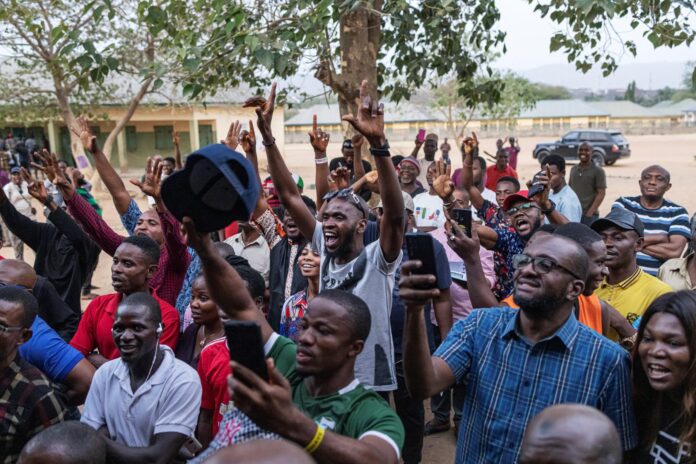
The lesson of 2023 is therefore both simple and profound. The Labour Party, energised by mass participation and youth mobilisation, especially around the candidacy of Peter Obi, demonstrated that a different kind of politics is possible in Nigeria. For the first time in years, a broad section of workers, students, and urban poor found a political expression that felt close to their daily struggles. It showed that when progressive forces come together, they can disrupt established political patterns and challenge the dominance of traditional parties.
But the same experience also revealed the fragility of such coalitions. Internal disputes, factional struggles, and defections weakened the momentum that had been built. Figures such as Yusuf Datti Baba-Ahmed and others moved away from the platform, while elected representatives shifted allegiance under pressure. These developments exposed a deeper problem: without ideological clarity, organisational discipline, and long-term unity, electoral breakthroughs can quickly dissolve.
This is not unique to one party. Across the broader opposition landscape, fragmentation remains the defining feature. The African Action Congress, the Peoples Redemption Party, and other progressive formations all carry elements of radical critique and popular appeal, yet they remain divided in strategy and organisation. Even movements inspired by long-standing traditions of resistance—such as those associated with Fela Anikulapo-Kuti—continue to influence political consciousness without translating into sustained political power.
The labour movement itself sits at the centre of this contradiction. On one hand, organisations such as the Nigeria Labour Congress have repeatedly demonstrated the capacity to mobilise workers around wages, subsidies, and public services. On the other hand, this industrial strength has not consistently been converted into political cohesion. The demands of workers—decent minimum wage, accessible healthcare, quality education, and social protection—require more than negotiation with governments; they require political power that can set national priorities.
From a broader intellectual perspective, this challenge is not new. Antonio Gramsci argued that ruling systems maintain power not only through institutions but through division—by preventing opposition forces from forming a unified “historic bloc” capable of challenging the status quo. In Nigeria today, the fragmentation of progressive and labour-aligned politics reflects exactly this problem. Disunity weakens resistance, while unity creates the possibility of transformation.
At the same time, the writings of thinkers such as Frantz Fanon remind us that liberation movements succeed only when they overcome internal divisions and connect political struggle to the material needs of the people. Across the world, from Latin America to parts of Asia, left and progressive coalitions have succeeded where they managed to bring together labour unions, social movements, and political organisations around a shared programme of redistribution and social justice.
In Nigeria, the task ahead is therefore not merely electoral coordination but political reconstruction. A viable left alternative must be grounded in clear commitments: a living minimum wage that reflects economic reality, large-scale investment in public healthcare and education, industrial policies that create jobs, tax reforms that shift the burden away from workers and toward wealthier elites, and strong protection for trade union rights. These are not abstract ideals; they are practical responses to everyday hardship.
However, policy alone is not enough. Unity must be built structurally, not rhetorically. That means developing durable coalitions between parties and labour organisations, strengthening internal democracy within progressive movements, integrating youth-led activism into formal political structures, and ensuring that disagreements do not repeatedly fracture collective efforts. Without such discipline, even the most promising movements will continue to rise and fall without achieving lasting change.
The current moment, then, presents both a warning and an opportunity. Disunity has repeatedly weakened opposition forces, but the level of public dissatisfaction also creates space for something new. If the left and progressive forces in Nigeria can overcome their divisions and build a coherent, organised, and disciplined alliance, they can move from being fragmented voices of protest to becoming a credible force for national transformation.
In the end, unity is not the final objective. It is the condition that makes every other objective possible.
Votes according to INEC in 2023:
| Candidate | Party | Vote |
| Tinubu | APC | 8.8 million |
| Atiku (now ADC) | PDP | 6.98 million |
| Peter Obi (now NDC) | Labour Party | 6.1 million |
| Rabiu Kwankwaso (now NDC) (won Kano Governor) | NNPP | 1.5 million |
| Omoyele Sowore | AAC | 14, 608 In 2019 it was 34,000) |
| Kola Abiola | PRP | 72,144 |