

By Tekena Amieyeofori (Nigerian Pilot, 28th February, 2026)
“We watched Diepreye die, not because we didn’t care as a family; we didn’t have money to save her life,” laments Doubra Timi. After more than a week of persistent appeals for an interview, Doubra hesitantly agrees to speak about a tragedy she hates to remember, yet will never forget. It is the painful story of how her immediate younger sister, Diepreye, passed away following an at-home abortion.
Diepreye Timi, just 18, died from severe bleeding in July 2020 after experimenting with a concoction of potash, salt, and lime to terminate an unwanted pregnancy. “My sister died while trying to save her life,” Doubra says, drowning in tears. Unable to afford emergency contraceptives like Postpill or Postinor-2, Diepreye resorted to a poisoned mixture. Her story is one of many similar tragedies. Young women and girls her age are denied safe abortions under Nigerian law, yet face limited access to contraceptives to prevent unwanted pregnancies.
The tragedy of Diepreye’s death is not isolated. It reflects a broader crisis in Nigeria where restrictive laws, cultural taboos, and chronic underfunding of reproductive health converge to create a deadly environment for women and girls. Families like the Timis are left helpless, watching loved ones die from preventable causes. The grief is compounded by the knowledge that these deaths are avoidable, if only policies and resources aligned with the realities of women’s lives.
Nigeria’s Criminal and Penal Codes prohibit abortion. Under the Criminal Code, providers face up to 14 years in prison, while women attempting abortion risk seven years. The Penal Code similarly prescribes imprisonment, fines, or both. These laws, rooted in colonial-era statutes and reinforced by religious and cultural conservatism, have remained largely unchanged despite mounting evidence of their devastating impact.
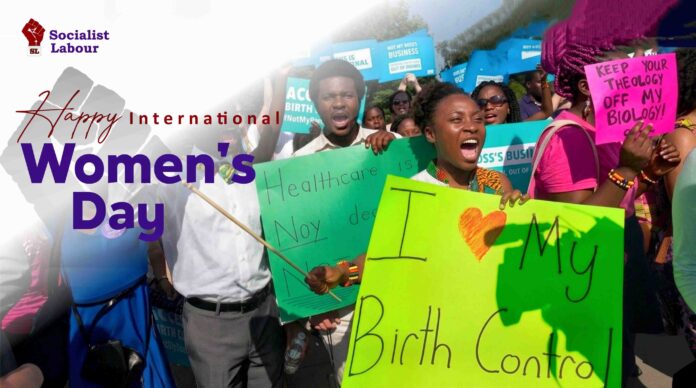
Gender rights activists like Vivian Bello, Convener of the Save Public Education Campaign, argue that “Pregnancy and child-bearing should be a matter of choice for women. Taking this choice away amounts to a violation of their rights.” For Bello and others, the issue is not only about health but about fundamental human rights. Denying women the ability to control their fertility is seen as a form of systemic oppression, perpetuating cycles of poverty, ill health, and gender inequality.
Nigeria’s laws also clash with the Maputo Protocol, an international treaty that recognises abortion as a human right under unsafe conditions such as rape, incest, or threats to life. Nigeria ratified the treaty but has not domesticated it, citing religious and cultural resistance. This gap between international commitments and domestic law leaves women vulnerable. In June 2025, a Federal High Court ruling exempted rape and incest victims from sanctions, allowing them to abort unsafe pregnancies. Yet the broader prohibition remains intact, meaning countless women outside those narrow exceptions continue to suffer.
The Maputo Protocol also mandates states to allocate budgets for family planning and contraception. Nigeria, however, has consistently underfunded reproductive health. In 2025, family planning allocation was slashed by 97 percent from N2.224 billion in 2024 to just N66.39 million. The withdrawal of UK Aid and USAID worsened the funding gap, leaving millions of women without access to contraceptives. Dr. Saad Oladimeji of Healthport Africa insists: “The Nigerian government has no moral justification to make safe abortion illegal without funding family planning initiatives to reduce unwanted pregnancies.”
The consequences are dire. In 2024 alone, limited contraceptive access led to 800,000 unwanted pregnancies, 300,000 unsafe abortions, and 10,000 preventable deaths. A March 2025 report by the National Library of Medicine revealed Nigeria accounts for 28 percent of global maternal deaths, the highest rate worldwide. These statistics are not just numbers; they represent lives cut short, families shattered, and futures stolen.
In November 2024, the Federal Government introduced free emergency cesarean sections. While welcomed by some, critics like Professor Richard Wokocha of Rivers State University call it a “reactive approach that only saves lives at the brink of death,” stressing that preventive measures, contraceptives and education, are far more cost-effective. For Wokocha, the policy reflects a broader pattern of governance that prioritises crisis management over prevention. “Nigeria seems to be gradually but steadily regressing into reactionary governance. Health policies should aim at preventing health challenges, and not only remedying health crises,” he warns.
Unconfirmed reports suggest N5.4 billion has been proposed for family planning in the 2026 budget. Activists like Bello see this as progress but demand full approval and timely release of funds. “Providing healthcare is not a privilege but a fundamental right,” she insists. Yet scepticism remains. Past promises have often been undermined by bureaucratic delays, mismanagement, or outright neglect. For many campaigners, the real test lies not in announcements but in implementation.
Nigeria’s maternal health crisis is not just medical, it is political. Criminalising abortion while starving family planning of funds is, in the words of campaigners, “a recipe for disaster.” The contradictions are stark: a government that prohibits safe abortion yet fails to provide affordable contraceptives; a state that pledges to protect life yet presides over one of the highest maternal mortality rates in the world. For families like the Timis, these contradictions translate into unbearable loss.
The human rights community in Nigeria is increasingly vocal about these issues. They argue that reproductive health is not merely a matter of personal choice but of social justice. Denying women access to safe abortion and contraception entrenches inequality, disproportionately affecting the poor, the young, and the marginalized. Wealthier women often find ways to access safe procedures abroad or in private clinics, while poorer women are left to risk their lives with dangerous concoctions or unqualified practitioners.
The cultural dimension cannot be ignored. In many communities, discussions about contraception and abortion remain taboo. Women face stigma not only from the law but from their families, churches, and neighbourhoods. This silence exacerbates the crisis, preventing open dialogue and perpetuating misinformation. Diepreye’s decision to use potash, salt, and lime reflects not only economic desperation but also a lack of accurate information about safer alternatives. Her death is a tragic reminder of the cost of silence.
For Dr. Saad, the path forward is clear: “If Nigeria is serious about reducing maternal mortality, then it must invest in preventive measures: contraceptives, family planning education, and accessible reproductive health services.” This call is echoed by international organizations, local NGOs, and grassroots activists. The consensus is that prevention is cheaper, safer, and more humane than crisis response. Yet translating this consensus into policy remains elusive.
The story of Diepreye is emblematic of a larger struggle. It is the story of a young woman whose life was cut short by poverty, restrictive laws, and systemic neglect. It is the story of a family forced to watch helplessly as their daughter bled to death. It is the story of a nation grappling with contradictions between tradition and modernity, between law and rights, between promises and realities.
As Nigeria debates its future, the voices of women like Doubra must not be ignored. Their grief is a powerful indictment of policies that fail to protect the most vulnerable. Their stories are a reminder that behind every statistic lies a human life, a family, a dream.