11th December,2025
By any measure, public heaIth care spending in Nigeria is frighteningly low. We now need increased unity across the sector to address this emergency. Without this unity, perhaps a million people will continue to die unnecessarily each year. We need a massive campaign uniting all trade unions and associations in the health sector to force the government to increase public health funding.
Last month the Minister of Health admitted that 850,000 children die every year from treatable diseases. If we add to this figure the number of women who die during child birth and the number of elderly people who die from lack of proper healthcare, then probably over a million Nigerians are dying each year from lack of access to proper healthcare.
The Lancet Nigeria Commission in 2022 reported that life expectancy was lower in Nigeria than in neighboring countries. “The country did not achieve any of the health-related Millennium Development Goals (MDGs), and progress towards health-related Sustainable Development Goal (SDG) targets has been modest at best” (page 4).Nigeria has one of the lowest levels of healthy life expectancy in Africa (WHO, 2015) and is the world capital for both maternal mortality and child mortality (Lancet, 2022).
The Gates Foundation recently calculated that public spending of $100 dollars per person would address 90% of the healthcare needs of the population. The Special Advisor to the President on Health admitted recently that health spending was only $91 in 2022. With the huge devaluation of the Naira since then this figure will now be much smaller. In comparison, South Africa spends around five times as much.
In 2001 African governments pledged to spend at least 15% of their budgets on health in the Abuja Declaration. But Tinubu is planning to spend only 5% of the Federal budget for this year on health. This is one of the lowest of any African government and around half the average for sub-Saharan Africa.
As a result of this low public spending on health services, at least 70% of health spending in Nigeria is from individual’sown pockets (around twice the figure for sub-Saharan Africa). But for many poor people the result is that they are not able to afford essential healthcare with the inevitable result that many die from common treatable diseases as the following table shows:
Top Causes of Death in Nigeria(2021)
| Estimated Deaths in 2021 | |
| Lower respiratory infections | 190,000 |
| Malaria | 180,000 |
| Diarrhoeal diseases | 150,000 |
| Tuberculosis | 120,000 |
| Birth asphyxia and birth trauma | 70,000 |
| Maternal conditions | 50,000 |
| TOTAL | 760,000 |
World Health Organisation-https://data.who.int/countries/566
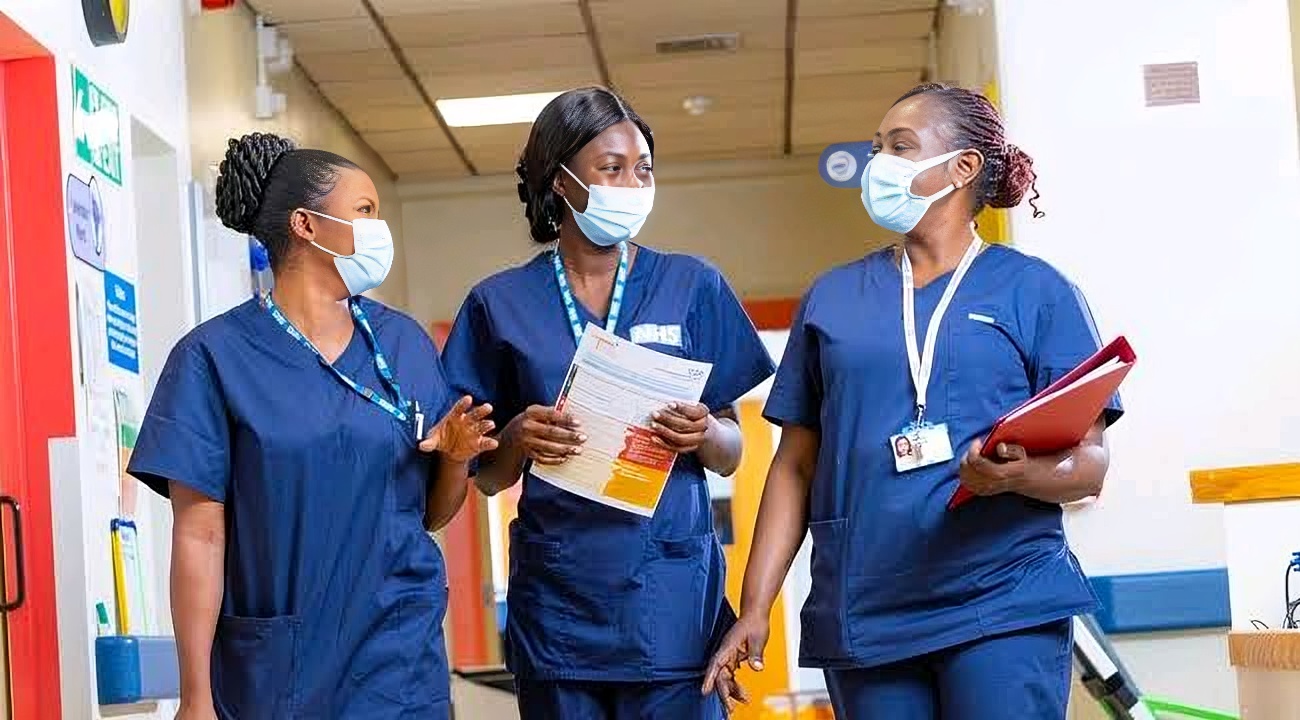
Despite this horrific situation, the trade unions and professional associations across the health sector have failed to unie in a common campaign for improved public funding of health. There is a deep divide between the doctors and the other health workers. All health professionals in Nigeria suffer from low pay, frequent late payment of salaries and wvork in appalling conditions.
Poor salaries result from poor funding of the health sector, but also arise from interprofessional conflict where the professions appear to be more concerned about minor interprofessional salary relativities than gaining increased funding for the sector and so better salaries for all. Doctors may have maintained the position that they are better paid than other professionals in the sector, but by international comparisons they are also very poorly paid and this explains why so many medical doctors leave Nigeria each year for greener pastures. Last year around the same number of doctors left Nigeria as graduated from all the medical schools.
As a result, it is estimated that more than half of the doctors in Nigeria are now working abroad and they are increasingly being joined by nurses and other health professionals. A successful united campaign would mean that health workers would not have to Japa to gain decent salaries.
Conflict between medical doctors and other health workers originated in colonial times, but it was only in 2006 that other health workers came together in the Joint Health Sector Union (JOHESU) to pursue their common demands.Although the nurses’ union, NANNM, had disputes with JOHESU from 2018 and formally left the coalition in April 2023.
Inter-professional rivalries (eg, among pharmacists, doctors, nurses, and laboratory scientists) undermine collaborative care and the ability of the health workforce to meet the care needs of the population. This rivalry, as well as disputes around remuneration, has led to multiple industrial actions like strikes and lawsuits in Nigeria. Such actions can last from a few weeks to several months, disrupting health-care services, worsening health outcomes, and further deteriorating working relationships among health-care professionals (Lancet, 2022: page 25).
Other health care workers complain about the domination of the healthcare sector by the doctors. They are often perceived as being part of the management and having undue influence on the government. Some doctors may hold very senior posts, but this is rarely the case for the members of NARD who are relatively newly qualified.
Earlier this year, the nurses, registered doctors and other health workers all took strike action, but generally at different times. As a result, they may not have won as much as they could have done if this action had been unified and coordinated.
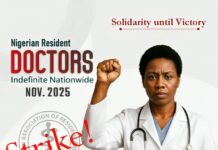
Members of the National Association of Nigeria Nurses & Midwives (NANNM) started a seven day national warning strike at midnight on 29th July 2025 at Federal, state and primary health facilities. The strike was suspended early, after four days. The doctors of the Nigerian Association of Registered Doctors (NARD) went on strike for almost the whole of November. Federal members of JOHESU also started a continuing strike from the middle of the month. JOHESU’s prime demand (as with NANNM) is for the implementation of a revised salary scale which has been a key demand of theirs for more than a decade.
We need the unity of all health workers, including at least the registered doctors of NARD, to take on the Government and force it to provide the funds that are essential to provide proper healthcare for everyone. Successful strikes will also need solidarity and support from the wider trade union movement-starting with NLC protests onDecember. It is the health of all workers and other poor people across the country that we need to fight for. We need to break the cycle of strikes, negotiations, agreements and then the failure of the Government to implement such agreements.
In solidarity!
Comrade Abiodun Olamosu,General Secretary, Socialist Labour