

Introduction
Nigeria’s economy is projected to continue growing __ around 4% in 2025 and 2026, according to the IMF. On paper, this looks encouraging. Growth rates are higher than those of the US and Europe, though slightly below the sub-Saharan African average. Yet for ordinary Nigerians, this growth is not translating into better living conditions.
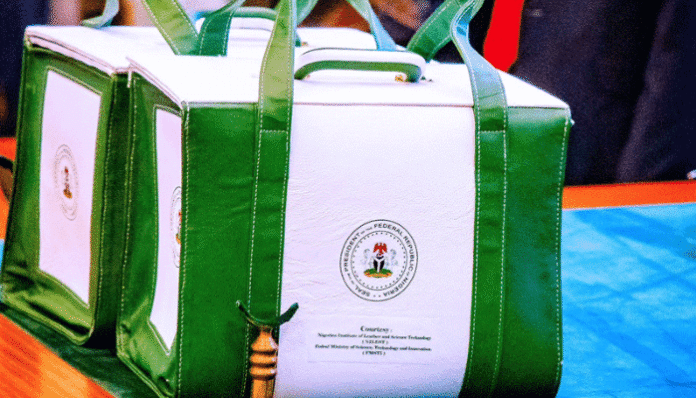
The 2026 Federal Budget increases overall spending only modestly, from an expected ₦55 trillion in 2025 to ₦58 trillion. More of this money will be directed toward capital projects, leaving less for salaries and materials once inflation is taken into account. The result is a budget that prioritizes infrastructure and debt servicing over the basic needs of citizens.
Health: A Broken Promise
In 2001, African leaders signed the Abuja Declaration, pledging to allocate at least 15% of their budgets to health. Nigeria’s 2026 budget includes only 4% for health, down from 5% in previous years. This is one of the lowest allocations in Africa, far below the continental average of 7%.
The consequences are stark:
– Health workers’ salaries remain stagnant, fueling strikes and low morale.
– Hospitals lack equipment and medicines, forcing families to pay out of their pockets.
– Many Nigerians simply cannot afford care, leading to early preventable deaths.
This steady decline in health spending means the government is breaking its promises and leaving citizens to fend for themselves.
Education: Neglecting the Future
Education is equally underfunded. UNESCO recommends that governments allocate at least 26% of their budgets to education, while the Global Partnership for Education sets a minimum of 20%. Nigeria will spend only 6% in 2026, down from 7% in 2025.
This underinvestment has serious consequences:
– Nigeria already has the world’s highest number of out-of-school children.
– Universities and schools face strikes, poor facilities, and underpaid staff.
– Without investment, the country risks falling further behind in global competitiveness.
The government’s refusal to prioritize education undermines the demands of unions like ASUU and jeopardizes the future of millions of young Nigerians.
Growing Revenue:
| Year | Federal Actual (₦ trillion) | Tax revenue – FIRS (₦ trillion) | Increase per year (%) |
| 2021 | 4.6 | 6.4 | |
| 2022 | 7.8 | 10 | 56 |
| 2023 | 12.5 | 12 | 20 |
| 2024 | 21 | 22 | 83 |
| 2025 (estimated) | 36 | 30 | 36 |
| 2026 (planned) | 34 | 31 | 3 |
Revenue and Debt: A Misplaced Debate
Government revenue has grown rapidly in recent years, FIRS collected ₦23 trillion in the first 9 months of 2025 or an annual rate of just less than ₦31 trillion. Yet this has not translated into better funding for health or education. FIRS is only expecting to collect a little bit more in 2026 with the new Tax Laws coming into effect. For a briefing on the news Tax Laws see:
Civil society often focuses on debt, but Nigeria’s debt-to-GDP ratio __ around 53% in 2025 __ is lower than the African average (64%) and far below Europe’s (80%). Compared to Ghana (59%), South Africa (77%), and Senegal (123%), Nigeria’s debt looks manageable.
The following graph is taken from the MTEF for 2026-28 prepared by the Ministry of Finance:
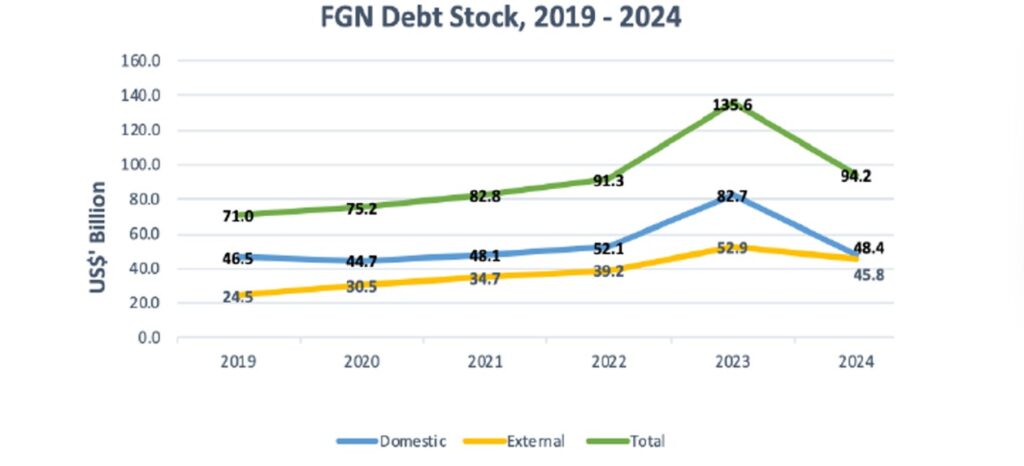
The real issue is not how much the government borrows, but how it spends. Debt is being used to finance capital projects rather than social services, leaving ordinary Nigerians with little benefit.
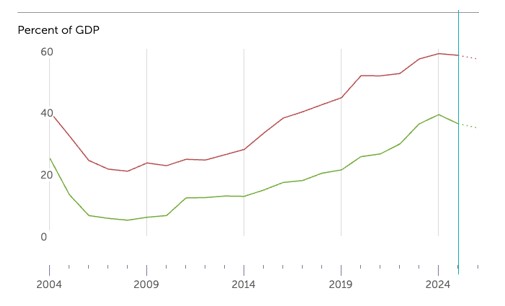
In addition, almost half of the Nigerian public debt is measured in Naira, so there is less risk from devaluation impacting on the level of debt. In June 2025, 47% of Nigerian public debt was held in naira.
Capital Spending: A Magnet for Corruption
The 2026 budget allocates 45% to capital projects, far above international norms of 15-20%. While infrastructure is important, such disproportionate spending raises serious concerns:
– Capital projects are often padded with inflated costs.
– Politicians insert constituency projects to benefit themselves.
– Contractors pay bribes to secure contracts and again when payments are released.
| Year | Planned capital spending (N trn) | Actual capital spending (N trn) | Percentage of total budget |
| 2021 | 4.2 | 3.6 | 32 |
| 2022 | 6.0 | 2.2 | 35 |
| 2023 | 6.6 | 1.6 | 27 |
| 2024 | 14 | 12 | 34 |
| 2025 | 24 | 5.3 | 44 |
| 2026 | 26 | – | 45 |
Actual spending on capital projects is often far lower than budgeted, but the inflated allocations create opportunities for corruption.
Conclusion
The 2026 Federal Budget offers no hope for ordinary Nigerians. Health and education, the foundations of a decent life, are being neglected. Instead, resources are funneled into capital projects that enrich a few while leaving millions behind.
If current trends continue:
– More than a million people could die each year from lack of affordable healthcare.
– Nigeria will remain the out-of-school capital of the world.
– Citizens will continue to feel the paradox of economic growth with declining living standards.
Many CSOs claim our attention by shouting about government debt which is well below the average for sub-Saharan Africa. In contrast they are accepting ridiculous allocations to capital spending which in reality are enabling massive looting of government funds. Another area of interest for CSOs is the new Tax Laws. The Federal budget indicates that most people will not pay increased taxes next year and most will see a modest reduction.
Civil society must shift its focus. Debt is not the main threat; corruption in capital spending and chronic underfunding of health and education are the key issues the working peoples. We can only hope that the campaigns for greater funding in these two sectors by JOHESU and ASSU are successful. Unless unions and advocacy groups succeed in pressing for change, another year will pass with huge preventable deaths and wasted potential.