

Tina Nkechi & Tokunbo Oke
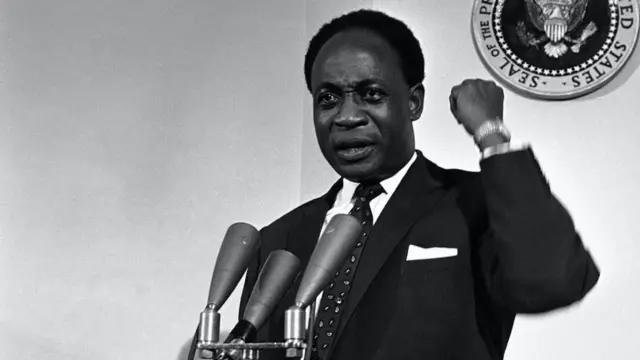
Nkrumah admitted the existence of class and class struggle when most socialist projects in African like Nyerere’s Ujamaa and Ahmed Sekou Toure’s Communocracy denied its existence. This is what made Nkrumah’s book such a powerful intervention when it was released in 1970.
Nkrumah’s removal from power in 1966 was a wakeup call for him. It had become impossible to deny the existence of class and class struggle as he had been turfed out of power by an alliance of his domestic class enemies and Imperialism.
This booklet remains a useful introduction, especially to the history, of Africa. But we have to remember that a lot has changed over the over 55 years since the booklet was written. Thankfully the Portuguese empire and the white minority regimes of Rhodesia and South Africa are no more.
In addition, both the African bourgeoisie (the bosses) and the working class are far stronger (on page 16 Nkrumah says that at the end of the colonial period there was a “virtually non-existent labour movement”). Similarly, The peasantry are far less significant now, especially as a socialist force. In addition, the presence in Africa of European ‘experts’ is far less common than it was in Nkrumah’s days.
On a world scale we saw the fall of ‘socialist’ Russia and Eastern Europe from the late 1980s and also the ‘socialist’ states in Africa. The socialist left is now much smaller.
Over the same period, with the introduction of Neoliberalism from around 1980, the state sector, state owned enterprises etc, are far less significant. Privatisation provided a huge bonanza and created a new layer of African bosses with the creation, for example of the multinational Nigerian banking sector (the largest bank, Access now operates in 20 countries).
Trade with the former colonial powers is much reduced. In Nigeria, for example, China and India are two of the top three trading partners. They include together 22% of foreign trade. Britain, in contrast, takes only 2% of Nigerian trade. Netherlands is the second largest trading partner and the US is the joint fourth with 6%.
Nkrumah emphasized the worker-peasant struggle for scientific socialism. He saw this taking place across three arenas, guerrilla activity, industrial action (strikes etc during which Nkrumah says, “mass feeling was awakened, and workers became to some extent conscious of themselves of as a class.” page 65) and political action. Although he emphasises the first on page 53 where he says that, “The wind of guerrilla struggle is blowing all over Africa and will not stop until Africa is united under socialism.” We would emphasize the working class and the need for industrial struggle as the prime mover towards socialism.
One key lesson is Nkrumah’s critique of ‘progressive’ coups which remains relevant:
“In some areas of Africa where army intervention has been proclaimed as revolutionary socialist, it has in fact been merely nationalist. The proclaimed aim is to end foreign exploitation and to improve the conditions of the people. Foreign firms are in some cases “nationalized”, and foreign bases are closed down. But the conditions of the ordinary people remain practically the same as before the intervention.” (page 44)
In the context of the xenophobic attacks on Nigerian and other Africans in South Africa, Nkrumah refers to this topic. On page 66 he says, “The anger of workers is surreptitiously fomented and directed by the [South African Government] not so much against its own reactionary policies as against the alien workers. It is they who are blamed for the scarcity of jobs, the shortage of houses, rising prices and so on.”
As long as the major changes that have occurred across Africa over the last half century are kept in mind, this remains a useful and perceptive booklet. One key issue is that it is now clearer, that, as Karl Marx said, socialism is the self-emancipation of the urban working class – rather than a peasant guerrilla struggle even if led by a proletarian party as Nkrumah expected. But Nkrumah did recognise that the struggle for socialism was global and so a United Socialist Africa was just the first step towards a global socialist society.