


Alex Batubo
In “About Us” on the Socialist Labour website – https://socialistlabour.com.ng/about-us/ – we quote Karl Marx as saying: “the emancipation of the working class must be the act of the working class itself” from his preface to the famous Communist Manifesto. One aspect of this phrase is the need for socialism to dismantle the current state and build our own workers state which will be based on some form of workers’ councils.
Politicians say vote for us and we will make everything wonderful. The problem is that once elected we have no power over them and they can do whatever they like. In addition, the real power in society does not lie in the National Assembly. It is the economic power the bosses have, but also the power of the chiefs of the police, army and other security forces and the media, newspapers, TV and radio.
In contrast, we are looking forward to the working class actually taking power themselves (not through a military coup nor bourgeois elected representatives), but in every factory, office, university or other workplace. During every high point of working class struggle we see the emergence of workers councils. Karl Marx learnt about these bodies from the Paris Commune, 1871. He saw the important aspects of their members being subject to immediate recall at any time and that they were only paid the average workers’ salaries.
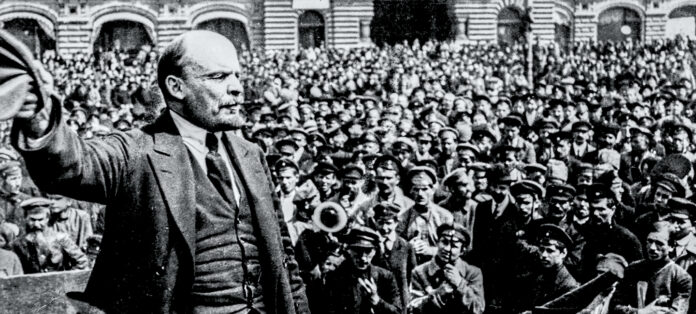
During the Russian revolution in 1917 we again saw the development of workers councils, called soviets in Russian. The Bolsheviks that led this revolution never gained a majority in the Russian parliament, the Duma, but they did win a majority in the soviets. This led Vladamir Lenin to call for “all power to the soviets” in early 1917.
https://socialistworker.co.uk/in-depth/february-1917-when-workers-remade-history/
Workers’ councils were also set up in Germany in 1918–19, Italy in 1919–20 and in Hungary in 1956. Embryonic councils also appeared with Chilean cordones in 1972 in South America. They were also set up in Iran during the overthrow of the Shah in 1979, when they were called Shoras. These councils emerged as a form of self-organization in factories and industries, often coordinating strikes and other forms of protest. For more details read the following: https://ivavalleybooks.com/2025/07/29/revolution-and-counter-revolution-in-iran/
Workers Councils also appeared in Egypt in the run up to the overthrow of Hosni Mubarak in 2011. They emerged as a form of self-organization in factories and industries, often coordinating strikes and other forms of protest. Socialists then argued for them to be adopted more widely.
The most recent appearance of workers councils was in Sudan, before the military coup and decent into civil war. The following article describes the emergence of these seedlings of working class power:
https://socialistworker.co.uk/in-depth/long-reads/all-power-to-sudans-resistance-communitees/
For a discussion on the importance of the Resistance Committees in Sudan, read this interview with three Sudanese socialists:
https://spectrejournal.com/the-future-of-the-resistance-committees-in-sudan/
More details can also be found on this page of the Socialist Labour website:https://socialistlabour.com.ng/sudan-the-resistance-committees-a-revolution-from-below/